
Call Today (253) 377-5160

Archive for the ‘Uncategorized’ Category

Embroidery on Customer-Supplied Items – Why It Doesn’t Pay to Bend Rules

Share

A Tacoma industrial company recently called us about embroidery and logo wear.  They said they were unhappy with their current embroidery vendor and looking for a change.  It seemed like an easy fit because they already had identified from their prior work a variety of clothing options that were available from our suppliers.  When we visited to clarify things and make the order official, someone handed us two jackets that “the owner picked up at Costco” and asked, “Can you do these too?”  Wanting to please a potentially lucrative client, and figuring we could put our foot down later about our No Customer-Supplied Items policy, we agreed.

Fast forward one week.  We successfully embroidered and prepared all of the clothing items this client had requested.  The two Costco jackets remained.  We put the first one on one of our embroidery machines.  Less than 60 seconds later, disaster struck and the machine tore a hole through the jacket.   The odds of this happening on any garment placed on a machine at any shop industry wide are are 2%.  But when the garment is something that the customer supplied and the logistics of replacing it involve driving around a city to purchase a replacement jacket at retail pricing while not getting other clients’ orders fulfilled, the odds seem to approach 50%.  So then, because the client wanted to save $10-20 on a jacket, we have to decide whether to spend $300-$400 of down time and cash outlay to fix something.

We’ve previously written about our general policy of not accepting customer-supplied items (see http://iminstitches.com/2011/five-reasons-why-embroidery-screen-printing-shops-dont-want-to-work-with-garments-you-have-supplied/).  It gets tempting to break that rule when we think there’s a nice big client on the other side of “just this one time.”  But every time we are reminded why the local embroidery shops that did do this have gone out of business.

Sorry folks, but that’s not worth the effort.  A business that wants to stay in business for the long haul can’t lose a dollar of business for clients who want to save a dime.


Embroidery for Hotel and Medical Applications

Share

We have some embroidery clients in the Seattle-Tacoma area with a very particular need — the need to wash their embroidered jackets, towels, and robes with bleach.  One of these clients is a string of dental offices that requested lab coats for its dental hygiene technicians.  Another is a hotel chain of which we have written before.  We supply that hotel chain with embroidered robes.  When the housekeeping staff changes the linens in the guest rooms, the robes get thrown into the laundry and submitted to a long exposure to a disinfecting bleach.  The dental offices also need to be able to wash the dental technicians’  embroidered lab coats with bleach.  The purpose of washing with bleach is, of course, to disinfect the garments, which have been exposed to bodily fluids.

“But,” you ask, “wouldn’t the bleach wash out the color in the thread of the embroidered logos on the garments?”

Yes, they would if an embroidery shop were to use traditional classic rayon thread.  However, just has technology has advanced in hundreds of other applications in our lives, it has also advanced in the manufacture of thread.

The solution for clients who are in need of bleach-resistant embroidery is called Polyneon thread from a thread supplier called Madeira.  It is completely unaffected by bleach.  You can take a 14 color embroidered logo with all colors of the rainbow, toss it into the laundry with an overdose of bleach, and it will come out of the laundry as radiant as it looked originally.  This makes Polyneon thread a perfect fit for medical offices, hotels, restaurants and other establishments seeking to promote their brand identity through logo wear.

Seattle-Tacoma Area Customer Finally Says “No” to Cheap Embroidered Polos

Share

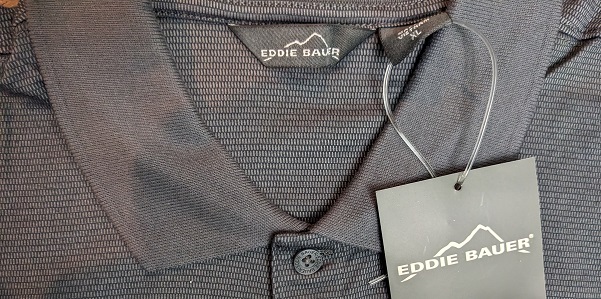
Take a look at the photo below and see if you can figure out what is wrong with this shirt.

embroidery-Tacoma-cheap-quality-logo-wear


One of our newer customers in the Seattle-Tacoma area ordered a small run of embroidered polos.  They had been ordering these shirts for years from the logo wear vendor that preceded us.  We dutifully ordered the shirts from our supplier.  We were a little hesitant, though, because it has been our experience that some items from some suppliers do not seem to be subject to rigorous quality control standards.

The box arrived within a couple of days.  We pulled the first polo shirt out of the box and set it down to mark it, but something did not look right.  Have you figured it out from the photo above?

If you could not figure it out, try the same photo with some straight edge rulers placed strategically:

custom-logo-shirts-Auburn-Sumner-WA


When the horizontal ruler is aligned with the bottom of the sleeves and the vertical rulers is aligned with the polo’s placket, you should expect to see that the intersection of the rulers creates angles of approximately 90 degrees.  We’re not even close to that here.

We pulled the second one out of the box and it had exactly the same problem, but the opposite direction!  Aaaarrrgh!

Rather than stitch on the shirts, we packed them all up,  brought them to our customer, spread them out on our customer’s desks and asked, “Do you really want to see your staff wearing these?”  The answer was an emphatic “No!”

We talked with our customer about how they were using these shirts.  It turns out they were giving a new shirt to each new employee as the employees emerged from orientiation training.  We advised our client to order a similar shirt from an alternate supplier that, we believe, just has better quality controls in place for their polos.  The customer agreed to switch and thanked us for showing her the problem with her original shirt selection.

You and Your Logo Wear Vendor — Who’s There for Whom?

Share

We have a new embroidery and screen printing client in the greater Seattle area who came to us in desperation. This junior football team shared with us that their season was about to begin. Three months prior, they had ordered team uniforms, embroidered coaches’ jackets, and other spirit wear from “the cheapest bidder.” Nothing had yet arrived. The team sportswear vendor they had chosen was unresponsive to their pleas for delivery and would not even provide news updates to help them manage the expectations of the increasingly dismayed players and parents.

We were fortunate to have been recommended by two people trusted by the organization’s board. One was a coach who had purchased from us as a business owner. The other was a Past President of the same Rotary Club to which one of our owners is the current President. Both testified about the quality of our work and our integrity as a vendor.

The team representatives met with me and asked what we could do to help them out. They asked anxiously what our turnaround time was. They could not believe that we promised a standard two week delivery window. They immediately ordered embroidered polos, jackets, and hats for the coaches, embroidered duffel bags for the players with added personalization of names and numbers, and an array of screen printed hoodies and t-shirts for spirit wear. Everything was delivered as scheduled, some items even within one week.

At the team’s request, we had also quickly set up a team fan wear virtual store so that parents could order apparel to support the team. We were shocked to learn that the previously selected vendor had demanded that all orders be placed by a specific deadline (months ahead of delivery), and that the vendor’s online spirit wear store actually has a “Closed” sign on its home page.

That led us to contemplate the main point in the headline of this post — who’s there for whom? When you shop for almost anything, is it not your expectation that the vendor should make things relatively easy for you to buy their product or service? Of course it is. Who are these vendors who behave as if their customers are there to support the vendor? Why are they still in business? Who are the customers who tolerate this treatment?

We believe that a vendor is supposed to be there for you, earning your business and trying to earn the right to your repeat business every time. We believe customers expect a quality product, offered at a reasonable price, and delivered in a reasonable time frame. We believe two weeks is a reasonable frame. We believe it is our job to try to meet that expectation. We are not perfect. We mess things up sometimes and sometimes things get delayed a little bit beyond the two week window we prefer, but we do at least try to keep our clients informed about what is going on. We never forget that our clients have other choices when it comes to logo wear providers.

How Logo Wear Can Boost A Prospect’s Confidence In Your Business

Share

Through our engagement in local business and community groups, we have had the opportunity to see a lot of small businesses come and go.  We can almost sniff out the ones that are going to fail based upon the way their representatives present themselves.  One of the most important indicators is whether that representative projects confidence.   I think this goes right down to the subjective, perhaps even unconscious decision-making that is wired into our brains that guides how some of us vote for leaders, decide who we admire, and perhaps even choose friends.  Would it not be advantageous to have that same wiring working to boost a prospect’s interest in your business?

We recently supplied some embroidered shirts to a small startup that supplies camera equipment.  The owner ordered only four shirts.  He wanted them because he was heading off to a trade show.  What do the shirts accomplish for him?  Several things:

  1. Awareness — At least people will know what he represents whether or not they ever speak to him.
  2. Branding — This builds upon Awareness because the firm has other marketing materials and is trying to achieve a consistent brand image.
  3. Boost A Prospect’s Confidence — Consistent branding materials help a consumer to decide whether your company is stable and a viable long-term supplier.

Stability is particularly important for potential clients who are looking for a long term relationship with your business.  They want to know if your company is just a flash in the pan or if you will be there to support your product several years down the road.

Think through how your company looks to your prospects.  Does your company inspire confidence?  Do your prospects feel comfortable that you will be there for years to come?  Do your representatives look and act like they are mercenary hires or like they belong to a brand?  Your website, your print materials, and your logo wear all help mold that brand image in the eyes of your target market.


Company Logo Wear in Corporate Branding — the IBM Example

Share

Branding one’s company involves a number of decisions from logo design and development of graphic standards to setting the corporate culture and tone of customer service.  The ultimate goal is to make a brand resonate well in the mind of the consumer.

But what happens when it’s time to send the customer-facing representatives out into the streets?  Smart marketeers are thinking ahead to this eventuality.  Perhaps branding for those sales representatives is best accomplished with a company lapel pin on a suit jacket.  For example, for years IBM was associated with blue suits, which helped create a corporate identity that worked for IBM.  Now what you are imagining in your mind is a bunch of people dressed in quality blue suits.  But what would happen to your image of IBM if those quality blue suits looked threadbare, had jacket lapels that were way out of fashion, or were otherwise of poor quality?  Would that not have tarnished your impression of the great IBM brand?

For many companies, branding efforts extend to outfitting employees in embroidered shirts, embroidered jackets, embroidered hats, and other logo wear.  Marketers should consider not only the quality of the stitch work of an embroidery shop, but also the quality of the garment upon which the logo will be placed.  Work closely with your embroidery shop to ensure that the garments meet your expectations for durability and style.  Otherwise, your branding may end up reminding people more of a circus when you had envisioned looking more like IBM.


Why your basic expectations of a logo wear provider could actually be costing you business.

Share

Most people would say that the rule of thumb about how long you have to make a first impression with a prospect is a maximum of 30 seconds.  If you think that that 30 seconds begins when you shake a hand and introduce yourself, you are wrong.  What are your sales representatives communicating before they have even had a chance to speak?  This is common sense to anyone heading into a job interview, but often gets lost when companies are looking to outfit their teams.   What impression are your clients and prospects forming when they see your team in the logo wear you have provided them?

You see, the question is not whether an embroidery and screen printing shop can provide you with cheap apparel.  We all can do that.  The real question is:  can you live with it?

So what are the basic expectations of a logo wear provider?  For about 70% of the prospects who call our shop, they seem to be:

  • The embroidered shirts, hats, or jackets will look decent when pulled out of the box.
  • The embroidery or screen printing will resemble the original design when staff tries them on.
  • Timely delivery
  • Inexpensive

Let us paint a possible outcome that satisfies those expectations.  Your company buyer orders $2000 worth of logo wear through an online vendor whose prices seemed most attractive.  The boxes of embroidered jackets and polos arrive two weeks later.  Things look great right out of the box.  Upon closer inspection, you notice that the part of your logo that should be burgundy is looking a little too close to purple.  A month later, your sales reps stop wearing the polos because the fabric is pilling up.  You look at one and notice that the shirt seems like it is now two years old, not one month old.  Your company mascot in the logo no longer seems to be smiling, but merely grinning and bearing it.

This is a corporate branding decision that gets worn into live conversations with potential buyers.  Why would you want to get into a position where your company logo is compromising your image?

Here’s how you can raise the expectation level and avoid this situation:

  1. Reorient your decision-making process toward buying quality.  Quality logo wear will last longer and look better.
  2. Get to know your embroidery and screen printing shop and see if they control their production.  Quality embroiderers and screen printers take pride in their work and know that happy clients are repeat clients and can refer business.   They won’t let poor quality work leave the shop because they know it will cost them a future order.
  3. Ask to see the quality of your vendor’s work.  Most shops can show you samples from other jobs that should help you determine your confidence level.
  4. Ask to see the quality of your vendor’s recommended apparel.  We will often visit a client with samples of new and worn garments from different vendors so that our clients can make a side-by-side comparison of features and durability.

If you follow those simple steps, you will find your way into quality corporate logo wear.  In so doing, your clients and prospects are likely to have confidence that quality is something your company prioritizes and provides.

How is it possible to guarantee quality embroidery digitizing?

Share

I received a thought-provoking e-mail from a vendor who would like to earn our business.  The service the vendor was selling was embroidery digitizing as well as conversion of art files into vector formats for screen printing.

I had just hit the delete button when it struck us what was most odd about the pitch — a bold claim in the vendor’s e-mail that read:  ”We guarantee quality.”

That one statement solidified why I was not interested in working with that vendor.  How can they guarantee quality?  Whose quality?  Who judges the quality?  Their boldest claim does not speak to whether the needs of my clients will be fulfilled.  That is what I guarantee.  That is what I require my vendors to guarantee.

Digitizing logos for machine embroidery is part software and part art.  Just guaranteeing that there will be an outcome is insufficient to ensure that my clients are achieving their branding goals.

The Top 4 Indicators of Poor Quality Sport Shirts You Need to Know before You Buy Embroidered Polos

Share

There is inexpensive and then there is cheap.  While inexpensive embroidered polos can lower your costs and make you a corporate branding hero, cheap embroidered shirts can actually raise your costs and lower your revenue!

If you don’t believe that, consider:  when was the last time you dressed in your cheapest clothes for a job interview?  You have never done that because you wanted to win the job offer!

Your company representatives are trying to win the next job for your business, and every time a prospect views a member of your team, that team member’s logo wear is making the first statement about your company.  You can train your marketing and sales staff to say the right things, but if you have outfitted them in dilapidated apparel, the prospect will be wondering how well his needs will be satisfied when your company could not even be bothered to outfit its own staff in quality shirts.

So here are the top four ways to spot poor quality sport shirts:

  • Number 4:  Buttons  – Look at the buttons on your favorite shirts.  Compare those to the buttons on the cheapest shirt you have.  What do you suppose is the wholesale pricing for buttons?  How would you compare that sum with the value of your time trying to replace a broken or lost button?
  • Number 3:  Plackets — If you are unaware, the placket is the part of a sport shirt that extends down from the collar to hold the buttons and the button holes.  Plackets should be straight.  End of story.
  • Number 2:  Loose threads — We are sure that you have purchased shirts that have not had any loose threads.  We are also sure that you have purchased shirts and been annoyed at having to cut loose threads along the inside seams of the shirts.  That is frustrating because you know from personal experience that it’s possible to make a shirt with no loose threads.  Yet this manufacturer either does not have the equipment or does not have the management to ensure that you have a good experience.
  • Number 1:  Collars — Collars are the number one dead give away of poor quality shirts.  The problem is, it’s not always easy to identify this problem at the outset of the shirt’s life.  The collars of poorly manufactured shirts will not hold up to repeated washings.  The same collar that laid perfectly flat when you pulled it out of the box now seems to require a flat iron to straighten it before every wear.

If you want to outfit your team in quality embroidered shirts that will last, there are two simple steps.  First, do a little research when selecting an embroidery shop.  We suggest you select one that seems less interested in the immediate sale than in having a long-term relationship with a client that will recommend the vendor to others.  Second, talk with your embroidery vendor about your needs and concerns, and then listen to their recommendations.

Embroidered Logos — Graphic Design Parameters

Share

Graphic designers and marketing staff should be aware that there is a minimum stitch length for machine embroidery.  While most logos will not be affected by this issue, there are certain design features that can run up against that limit.  This can lead to inconsistent branding between print materials and corporate logo wear.

A good examples would be a design with a vertical striped “picket fence” effect.  A logo with very fine stripes may look great in print where pixels can be printed as thin as the eye can see.  However, that same design will have to be compromised for embroidery.  A good embroidery shop will work with the customer to determine how they want to solve the issue, with some possibilities being: (a) reducing the overall number of stripes so that the minimum stitch length can be achieved, or (b) eliminating the stripes in favor of a solid field.  In a nutshell, the goal becomes to make the embroidered logo resemble or remind people of the company logo rather than to make the embroidered logo a duplicate of the company logo.  That may not be an issue for Bob’s Painting, but could be a deal breaker for a multinational corporation planning to register a new trademark.

The minimum stitch length for machine embroidery is about 1mm, depending upon the machine manufacturer.  If the logo is intended to be worn on a company’s embroidered shirts, plan on the logo being at least 1.5″ wide and not more than 4.5″ wide at the very greatest, depending upon customer preference for a subdued or a loud approach to their logo wear.  Do your math accordingly about the stripes.


Call Today!

(253) 377-5160 - Tacoma, Lakewood, Puyallup, Sumner, WA

(206) 745-4650 - Seattle, Burien, Des Moines, Tukwila, WA

(425) 336-2188 - Bellevue, Issaquah, Redmond, Renton, WA

(360) 339-8707 - Olympia, Lacey, Tumwater, WA

(503) 406-8566 - Beaverton, Portland, OR

(866) 522-7571 - (Elsewhere) Toll Free

Client Comment

I’m In Stitches provides excellent work at a great price with superb customer service.